
I wrote this book for my mother, and her mother, and mothers everywhere
Dedication: The Color of Water
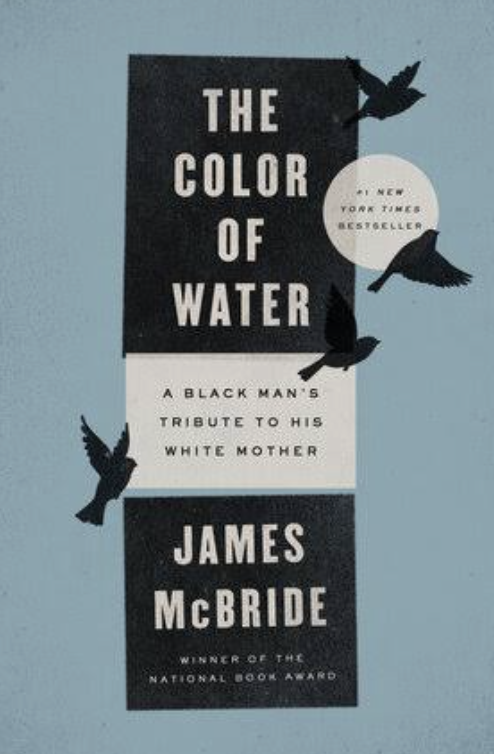
When James McBride was a little boy, he asked his mother what color God was and she said, “God is the color of water.” That answer became the title of a memoir Riverhead Books published on January 23, 1996 that went on to spend more than two years on the New York Times bestseller list and sell more than two million copies. It is still taught in high schools and colleges all over this country. Maybe you read it there. Maybe you’re reading it for the first time this year. No matter then or now, this is a book that does something very few books on this topic do: It jumps race all together and makes the reader see it anew.
Ruth:
She was born Ruchel Dwajra Zylska in Poland in 1921. In America the name became Rachel Deborah Shilsky, and later Ruth McBride Jordan. Three names. Remember that when we get to identity. She came to the United States when she was two. Her father, a failed itinerant Orthodox rabbi, finally settled the family in Suffolk, Virginia. There he ran a store in the Black part of town.
He was a racist. He also sexually abused his daughter. Ruth didn’t tell her children any of this. James only learned it as an adult, when she finally agreed to tell him her story.
She left Virginia for New York. In 1942 she married Andrew Dennis McBride, a Black man from North Carolina, and converted to Christianity. Her family not only disowned her, they sat Shiva for her meaning to them, she was dead.
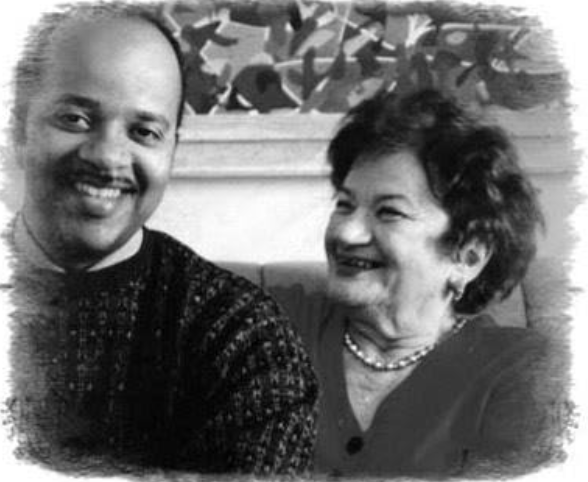
Ruth and Andrew founded the New Brown Memorial Baptist Church in their living room in the Red Hook projects in Brooklyn. Andrew became its minister. Then Andrew died of lung cancer while Ruth was pregnant with their eighth child: James. Ruth then married Hunter Jordan and had four more children. She was widowed twice and worked nights as a typist. Every one of her twelve children went to college. She died at home in Ewing, New Jersey, on January 9, 2010. She was 88.
 James:
He was born in Brooklyn on September 11, 1957, and lived in the Red Hook Houses until he was seven. The family moved to Queens, and to Wilmington, Delaware, in his teens. As a boy he wondered why his mother looked nothing like him, and he asked her about it. She pointed him back to school and church.
The late 1960s made it worse. The Black Power movement left young James afraid for his mother: for her safety, and for her standing in a Black neighborhood. He couldn’t name what she was, and she wouldn’t. Add his stepfather’s death, and the result was what you’d expect. He dropped out of school, ran with the wrong crowd, and used drugs.
Then he turned it around. He went to Oberlin, where he studied jazz with Wendell Logan, then earned a journalism master’s at Columbia at 22. He reported for Wilmington’s News Journal, the Boston Globe, People and the Washington Post.
At 30 he quit the Post and moved to New York to play jazz. For about nine years he worked as a musician. He played tenor sax for the singer Little Jimmy Scott and wrote songs for Anita Baker and Grover Washington Jr. He even wrote music for Barney. (For the record, he says he did not write the “I Love You” song, though he wishes he had.)
Notice what that résumé is missing: an MFA, a workshop, a literary apprenticeship. McBride is a reporter and a musician. He knows how to interview, and he knows how to listen for a voice.
After Publication:
The Color of Water was his first book. Then came novels: Miracle at St. Anna (2002), Song Yet Sung (2008), and The Good Lord Bird (2013), which won the National Book Award. He wrote Kill ’Em and Leave, a book about James Brown, in 2016. Deacon King Kong (2020) won the Carnegie Medal and was an Oprah’s Book Club pick. The Heaven & Earth Grocery Store (2023), a novel about Black and Jewish neighbors in 1920s and ’30s Pennsylvania, won the Kirkus Prize.
President Obama presented him the 2015 National Humanities Medal in 2016. In 2024 the Library of Congress gave him its Prize for American Fiction.
McBride says he got interested in early 20th-century American Jews while researching this book, in the Virginia town his mother fled. Nearly thirty years later he was still writing about Black and Jewish neighbors. The first book never let go of him.
Fourteen Years in the Making
It started in 1981 with a Mother’s Day essay McBride wrote about his mother for the Boston Globe. Readers wrote back and told him to write the book.
The problem was his mother. Ruth didn’t want to talk. She had spent forty years not talking. It took more than a decade before she agreed. When she did, he sat down with her and recorded her story, and those interviews became her chapters.
He was clear about whose words those were. In a 1997 online chat with readers he said, “Eighty percent of those words were hers.”
Why push so hard on a mother who didn’t want to be pushed? He answered that himself, in an excerpt Oberlin’s alumni magazine ran in 1996: “I had to know who I was.”
That’s the engine. Not a market, not a trend. But a question he could not leave alone.
By his own account he worked on it for about fourteen years. He wrote while on tour as a musician: in hotel rooms, vans, airports, libraries and buses.
Riverhead Books published it on January 23, 1996. Two days later McBride was on NPR’s Fresh Air. That season, Booklist and the Chicago Tribune both reviewed it alongside another memoir of an interracial family, Scott Minerbrook’s Divided to the Vein.
Then something happened nobody planned. A 1998 article in the Detroit Jewish News reported that more than two-thirds of McBride’s talks had been in Jewish settings, and that his early readers were mostly Jewish women. Black readers came in a later surge. He spoke in synagogues and Baptist churches, in Jewish community centers and in living rooms. A reading at Yeshiva University drew more than 400 people.
In October 1996 he spoke at a sold-out dinner in Suffolk, Virginia, the town his mother had run from.
By March 1998 the paperback had been on the Times list for a full year, with more than 700,000 copies in print. It won the 1997 Anisfield-Wolf Book Award and was an ALA Notable Book. Today it has sold more than two million copies in more than sixteen languages.
And McBride? He has said that if he’d known how many people were going to read it, “I would’ve written a better book.”
1996 Critics Raise Their Voices
1996 reviews were warm almost across the board. The sharper objections came later.
Champions. Kirkus got there first, in November 1995, and set the tone. It called the book “loving if sometimes uncomfortable.”
In the New York Times Book Review, H. Jack Geiger called the son’s and mother’s stories “beautifully juxtaposed.”
The Washington Post Book World called it “a well-written, thoughtful contribution to the literature on race.”
The Boston Globe: “Superbly written.”
Publishers Weekly called it “moving and unforgettable” and said people of every color and faith should read it.
In The Nation, Marina Budhos titled her review “Black Man, Jewish Soul” and praised both its literary merit and what it added to the country’s arguments about race and identity.
James Marcus’s in Salon wrote, at a time when Black-Jewish relations were badly strained, McBride’s book shows the two groups have a long history of living side by side, “sometimes within a single person.”
n the Chicago Tribune, John Blades read the book as proof of how divided America remains: not only between Black and white, but between Black and Black.
Detractors. In 1998 Mary Daniels Brown, writing on her literary blog Notes in the Margin, went straight at the form. Her complaint: “the two stories really are not parallel.” She felt McBride never said clearly what his mother’s revelations meant to him. But still, she still recommended the book.
The heavier critique is recent. In 2024, in the Journal of Contemporary Antisemitism, the scholar Efraim Sicher looked at several Black memoirs with Jewish threads running through them. He argues that McBride claims a Jewishness that ends up erasing what makes Jews different.
Jewish readers had their own hard moment with Ruth. At Stern College, a Jewish women’s college, students were at first taken aback that a woman would walk away from Judaism. They came to a more complicated view by the end.
And ordinary readers, the people who post reviews online, raise the same points in plainer language. Some say Ruth’s family, especially her father, comes close to an antisemitic caricature. Some say the book goes easier on Christianity than on Judaism. Some say it reads more like journalism than memoir.
Where the Book Met America
Where does this book sit on the long and complex timeline of race in this country?
- 1924. Virginia passes the Racial Integrity Act, banning marriage between white and Black people. Ruth has just arrived in America.
- 1942. That law still stands in Virginia. In New York, Ruth marries Andrew McBride.
- 1958. Gallup asks Americans for the first time whether they approve of marriage between Black and white people. Four percent say yes. That same year, Virginia arrests Mildred and Richard Loving for being married. James is a baby.
- 1965. Forty-eight percent of Americans approve of laws making such marriages a crime. James is seven.
- June 12, 1967. In Loving v. Virginia, the Supreme Court strikes down Virginia’s ban and those of fifteen other states. James is nine.
- Late 1960s. Black Power. A teenage James is afraid for his white mother.
- August 1991. Crown Heights, Brooklyn: three days of riots between Black and Jewish neighbors, one of the lowest points in Black-Jewish relations. McBride is deep in the book. Only 48 percent of Americans approve of interracial marriage.
- November 1993. Khalid Muhammad, a Nation of Islam aide, gives an antisemitic speech at Kean College in New Jersey. Mainstream Black leaders denounce it.
- October 3, 1995. O.J. Simpson is acquitted, live on television, in front of more than 150 million people. Black and white Americans see the verdict in starkly different ways. Thirteen days later comes the Million Man March.
- January 23, 1996. The Color of Water is published.
- 1997. For the first time, a majority of Americans, 64 percent, approve of interracial marriage. The government decides that the 2000 census will let people check more than one race. McBride tells readers, “I think there should be one box human being.”
- 2021. Approval of interracial marriage reaches 94 percent.
When James was nine, it took the Supreme Court to make his parents’ marriage legal everywhere. When he was nearly forty, most Americans finally approved of it.
So Did He Jump Race?
Yes. I believe McBride jumped the whole divisive question of race in America, and he did it with three things: respect, honesty, and form.
Respect. He doesn’t explain his mother or defend her. He hands her the microphone. Eighty percent of the words, remember, are hers.
Honesty. He doesn’t clean anything up: not the abusive rabbi, not his own years of drugs and trouble, not his shame as a kid that his mother was white. Kirkus felt the discomfort. Good.
Form. Two voices, side by side, never merging. A Black son and a white Jewish mother, sharing a book without either one being absorbed by the other.
The government agreed, in its way. McBride’s National Humanities Medal was given “for humanizing the complexities of discussing race in America.” Humanizing. Not solving. Not explaining. Making human.
But then again . . . did he really jump it?
In that 1997 chat with readers, McBride said that given the choice he’d rather check “other,” but he’ll always check “Black.” Twenty years later, in a 2017 NPR interview, he was blunter: “There will always be problems of race in this country.” In that same interview he said he’d rather illuminate than argue, and that he didn’t think you can change people by talking at them. That doesn’t sound like a man who thinks the divide is behind us.
But look at what else he said in 2017. He complained that when a Black writer touches race at all, the work automatically becomes a “race story.” His stories, he insisted, are about human beings. In a 2016 profile from the National Endowment for the Humanities, he credits his mother with teaching him that people share more than they differ.
So McBride didn’t jump race by pretending it isn’t there. He knows it’s there. He checks the box. He jumped it the way his mother did with that answer about water: he refused to let it be the deepest thing about a person.
Ruth’s line didn’t settle the question for young James. It quieted his confusion only for a while. The book is what he built when the quiet ran out.
🤔 Questions to Ponder:
What did this book to to you? When you read it, what questions bubbled up? What answers did you find? Did you finish it and if not, why? Looking forward to the discussion.